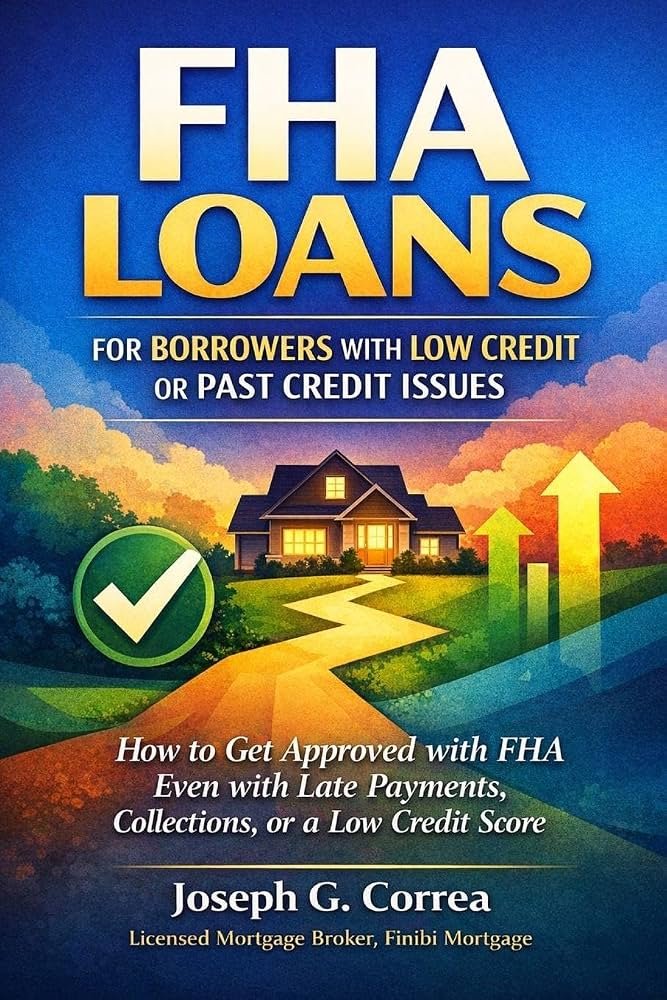
FHA Loan Credit Score: What Credit Score Do You Need to Qualify?
Buying a home is a major financial goal, but qualifying for a mortgage can be challenging if you have a limited credit history or a less-than-perfect credit score. Fortunately, the Federal Housing Administration (FHA) offers mortgage programs designed to make homeownership more accessible to borrowers who may not qualify for conventional financing.
One of the most important factors lenders consider when reviewing an FHA loan application is your credit score. Understanding the FHA loan credit score requirements can help you determine whether you are eligible, how much money you may need for a down payment, and what steps you can take before applying.
Under the current standard FHA credit-score guidelines, borrowers with a score of 580 or higher may qualify for maximum financing with a down payment as low as 3.5%. Borrowers with scores between 500 and 579 generally need at least a 10% down payment. However, individual lenders may have stricter requirements, and meeting the minimum score does not guarantee loan approval.
What Is the Minimum Credit Score for an FHA Loan?
The Federal Housing Administration establishes minimum credit-score requirements for its insured mortgage programs. These requirements are generally more flexible than those used for many conventional mortgages.
Under the current standard FHA policy, the credit-score and down-payment requirements are:
| Credit Score | Minimum Down Payment |
| 580 or higher | 3.5% |
| 500–579 | 10% |
| Below 500 | Generally not eligible under standard FHA credit-score rules |
For example, if you want to purchase a home for $250,000, your minimum down payment could look like this:
- With a credit score of 580 or higher, 3.5% equals $8,750.
- With a credit score between 500 and 579, 10% equals $25,000.
These figures represent minimum down payments, not the complete amount needed to purchase a home. Buyers may also need money for closing costs, prepaid expenses, and other transaction-related charges.
It is important to remember that FHA requirements are not the only approval criteria. Mortgage lenders can establish additional standards, which means some lenders may require a higher credit score than the FHA minimum.
What Is an FHA Loan?
An FHA loan is a mortgage issued by a private lender and insured by the Federal Housing Administration, a government agency within the U.S. Department of Housing and Urban Development (HUD).
The FHA does not directly lend money to homebuyers. Instead, it provides mortgage insurance that protects approved lenders against certain losses if borrowers default.
This insurance arrangement allows participating lenders to offer mortgage financing with more flexible credit and down-payment requirements.
FHA loans are particularly popular among:
- First-time homebuyers.
- Borrowers with limited credit histories.
- People who have lower credit scores.
- Buyers who cannot afford a large down payment.
- Individuals who may have difficulty qualifying for conventional mortgages.
FHA financing is available for eligible residential properties, including certain one-to-four-unit properties, subject to program requirements.
How Does Your Credit Score Affect FHA Loan Approval?
Your credit score helps lenders evaluate how you have managed financial obligations in the past. It is one part of the mortgage underwriting process, along with your income, debt, employment, savings, and overall financial situation.
A higher credit score may make it easier to qualify for an FHA mortgage and obtain more favorable loan terms.
Credit Score of 580 or Higher
Borrowers with a qualifying credit score of at least 580 may be eligible for maximum FHA financing, which generally allows a down payment as low as 3.5%.
This option can be helpful for buyers who have a limited amount of savings but demonstrate responsible credit management.
Credit Score Between 500 and 579
Applicants in this range may qualify under FHA guidelines, but they generally need a down payment of at least 10%.
For example, purchasing a $200,000 home would require a minimum down payment of $20,000 under this credit-score category.
Not every lender accepts applications in this range, so borrowers may need to contact multiple FHA-approved lenders.
Credit Score Below 500
Borrowers with a score below 500 generally do not meet the standard FHA minimum credit-score requirement.
If your score is below this level, consider reviewing your credit reports, addressing outstanding debts, and improving your payment history before applying.
Does FHA Require a 580 Credit Score?
No. The FHA does not require every borrower to have a 580 credit score.
The standard FHA guidelines allow certain borrowers with scores between 500 and 579 to qualify with a down payment of at least 10%.
However, borrowers with scores of 580 or higher may qualify for the lower 3.5% down-payment requirement.
The distinction matters because some lenders advertise FHA loans with a minimum credit score of 580, 600, or 620. These numbers may reflect the lender’s own underwriting policies rather than the FHA’s minimum requirements.
If your credit score is below a lender’s stated minimum, ask whether another FHA-approved lender may consider your application.
What Credit Score Do You Need for an FHA Loan With 3.5% Down?
To qualify for maximum FHA financing with a down payment as low as 3.5%, borrowers generally need a qualifying credit score of at least 580.
Here is an example of how the down payment works:
| Home Purchase Price | Down Payment at 3.5% |
| $150,000 | $5,250 |
| $200,000 | $7,000 |
| $250,000 | $8,750 |
| $300,000 | $10,500 |
| $350,000 | $12,250 |
| $400,000 | $14,000 |
These examples show the minimum down-payment amount before considering closing costs and other expenses.
A 3.5% down payment can make purchasing a home more accessible, especially for first-time buyers who have not had many years to build savings.
However, putting down less money generally means borrowing a larger amount. FHA loans also require mortgage insurance, which should be included when comparing the total cost of financing.
Which Credit Score Do FHA Lenders Use?
Mortgage lenders generally review credit information from the three major U.S. credit bureaus:
- Experian
- Equifax
- TransUnion
For traditional FHA underwriting, lenders determine a Minimum Decision Credit Score using the applicable FHA methodology.
When there are multiple borrowers, the lender generally uses the weakest borrower’s applicable decision score to determine the credit-score category for the transaction.
This means the score you see through a credit monitoring application may not be identical to the score used during your mortgage application.
For example, your banking app might display a VantageScore, while a lender may use a mortgage-specific FICO score under the existing FHA scoring framework.
In 2026, HUD announced plans to allow additional scoring models, including VantageScore 4.0 and FICO Score 10T. Their implementation for FHA Title II mortgage case numbers is scheduled for January 1, 2027. Until the applicable implementation date and requirements take effect, existing FHA scoring policies remain in place.
Therefore, it is best to ask your mortgage lender which scoring model and credit report will be used for your application.
Other FHA Loan Requirements Besides Credit Score
Having the minimum credit score is only one part of qualifying for an FHA mortgage. Lenders also evaluate several other factors to determine whether you can comfortably repay the loan.
1. Stable Income and Employment
Lenders review your income and employment information to understand whether you have the financial ability to make regular mortgage payments.
You may need to provide documents such as:
- Recent pay stubs.
- W-2 forms.
- Federal tax returns when applicable.
- Bank statements.
- Employment verification.
Self-employed borrowers may need additional documentation to demonstrate consistent income.
2. Debt-to-Income Ratio
Your debt-to-income ratio (DTI) measures how much of your gross monthly income goes toward paying monthly debts.
For example, suppose your gross monthly income is $6,000 and your total monthly debt payments are $2,400.
Your DTI would be 40%.
Lenders consider this ratio when determining whether your income can support a new mortgage payment. FHA underwriting can allow higher ratios in certain circumstances, depending on the borrower’s overall financial profile and underwriting results.
3. Down Payment and Closing Costs
You must have enough eligible funds to cover the required down payment and applicable closing costs.
Depending on the transaction, acceptable down-payment sources may include personal savings, eligible gift funds, or certain approved assistance programs.
4. Primary Residence Requirement
Most standard FHA purchase loans are intended for borrowers purchasing a primary residence.
You generally must plan to occupy the property as your home rather than purchase it solely as an investment property.
5. Property Appraisal
The home must undergo an FHA appraisal to evaluate its value and determine whether it meets applicable property standards.
The appraisal considers factors related to the property’s safety, security, and structural soundness.
6. FHA Loan Limits
FHA mortgage limits vary by county and property type. The maximum amount you can borrow depends on where the property is located and the applicable annual loan limits.
A home may meet the credit requirements but still fall outside the FHA loan limit for its location.
Can You Get an FHA Loan With Bad Credit?
Yes, some borrowers with poor credit may qualify for an FHA loan.
The FHA program is designed to provide more flexible mortgage financing than many conventional loan options. However, the ability to qualify depends on your credit score, down payment, repayment history, income, and the lender’s underwriting standards.
If your score is between 500 and 579, you may be eligible with at least 10% down under standard FHA guidelines.
If your score is below 500, improving your credit before applying is generally the better approach.
Even if your score meets the minimum, recent serious delinquencies, unresolved collections, or other financial concerns may affect the lender’s decision.
Some lenders also have additional requirements for borrowers with poor credit.
How to Improve Your Credit Score Before Applying for an FHA Loan
If your current credit score is below the level needed for your preferred down-payment option, taking time to improve your credit may strengthen your application.
The following steps can help.
1. Pay Every Bill on Time
Payment history is the most important factor in a traditional FICO score. Make sure credit card payments, auto loan installments, and other reported credit obligations are paid by their due dates.
Consider setting up automatic payments or reminders to prevent missed payments.
2. Reduce Credit Card Balances
High credit utilization can negatively affect your score. Try to reduce outstanding balances and avoid using most of your available credit.
For example, if your credit limit is $5,000 and your balance is $4,000, your utilization is 80%. Paying down the balance can help lower this percentage.
3. Review Your Credit Reports
Check all three credit reports for inaccurate information, unfamiliar accounts, or incorrectly reported late payments.
You can obtain free reports through AnnualCreditReport.com.
Dispute inaccurate information with the relevant credit bureau and the company that supplied the information.
4. Avoid Opening Too Many New Accounts
Applying for multiple credit cards or loans before a mortgage application may create unnecessary hard inquiries.
Avoid taking on new debt unless it is genuinely necessary.
5. Pay Outstanding Debts Responsibly
Review any collection accounts or overdue balances on your credit report.
Confirm that the information is accurate and discuss repayment options with the relevant creditor or collection agency.
Do not assume that paying a collection automatically removes it from your credit report.
6. Save for a Larger Down Payment
A larger down payment may help you qualify under the FHA’s lower-credit-score category and reduce the amount you need to borrow.
It can also improve your overall financial position when purchasing a home.
FHA Loan vs. Conventional Loan: Credit Score Requirements
FHA and conventional mortgages have different eligibility rules, down-payment options, and mortgage insurance structures.
FHA loans are insured by the federal government, while conventional mortgages are not insured by the FHA.
Here is a general comparison:
| Feature | FHA Loan | Conventional Loan |
| Credit requirements | More flexible FHA guidelines | Depends on lender and loan program |
| Minimum down payment | 3.5% with qualifying score | Can be as low as 3% for eligible borrowers |
| Lower credit score options | FHA policy allows scores from 500 with 10% down | Requirements vary |
| Mortgage insurance | FHA mortgage insurance generally required | Private mortgage insurance may apply with less than 20% down |
| Property requirements | FHA appraisal standards apply | Conventional appraisal standards apply |
The Consumer Financial Protection Bureau notes that FHA loans can be less expensive for borrowers with lower credit scores or smaller down payments. However, conventional loans may be more affordable for some borrowers with stronger credit and larger down payments.
The best option depends on your credit profile, interest rate, down payment, mortgage insurance costs, and total loan expenses.
Is an FHA Loan a Good Option for First-Time Homebuyers?
An FHA loan can be a useful option for first-time homebuyers who have limited savings or do not have an excellent credit score.
Its lower down-payment requirements can make homeownership more accessible to people who might otherwise struggle to qualify for a mortgage.
However, an FHA loan is not automatically the cheapest option.
Borrowers should compare:
- Interest rates.
- Upfront mortgage insurance premiums.
- Annual mortgage insurance costs.
- Closing costs.
- Loan terms.
- Total monthly housing expenses.
You should also compare FHA offers with conventional mortgage offers from multiple lenders.
Looking at the total cost over time can help you choose a mortgage that fits your financial situation rather than focusing only on the minimum credit score.
Conclusion
Understanding the FHA loan credit score requirements can help you prepare for the homebuying process and choose the right mortgage option. Under current standard FHA guidelines, borrowers with a credit score of 580 or higher may qualify for a down payment as low as 3.5%, while those with scores between 500 and 579 generally need at least 10% down. However, lenders can establish stricter requirements, and approval depends on more than credit score alone.
Before applying, review your credit reports, reduce outstanding balances, maintain on-time payments, and compare offers from multiple FHA-approved lenders. A stronger financial profile can improve your chances of qualifying and help you find more affordable mortgage terms.
Frequently Asked Questions
1. What is the minimum credit score for an FHA loan?
Under current standard FHA guidelines, the minimum score is generally 500. Borrowers with scores between 500 and 579 typically need a 10% down payment, while those with scores of 580 or higher may qualify with 3.5% down.
2. Can I get an FHA loan with a 580 credit score?
Yes. A 580 credit score generally meets the FHA requirement for maximum financing, which allows a down payment as low as 3.5%. However, the lender must also review your income, debts, employment, and other eligibility requirements.
3. Can I qualify for an FHA loan with a 500 credit score?
You may qualify under standard FHA guidelines with a score of 500, but you generally need a down payment of at least 10%. Some lenders may require a higher score or may not accept applications at this level.
4. Do FHA lenders use FICO or VantageScore?
Under the existing FHA scoring framework, lenders use the applicable approved credit-score methodology, traditionally based on Classic FICO scores. HUD has announced that VantageScore 4.0 and FICO Score 10T are scheduled to become eligible for FHA Title II underwriting beginning January 1, 2027.
5. Does an FHA loan require a higher credit score than a conventional loan?
Generally, FHA loans have more flexible credit requirements than many conventional mortgage programs. However, actual requirements depend on the lender, loan program, down payment, and overall financial profile. Comparing both options can help you find the most suitable mortgage.
One thought on “FHA Loan Credit Score: What Credit Score Do You Need to Qualify?”