580 Credit Score: Is It Good or Bad, and How Can You Improve It?
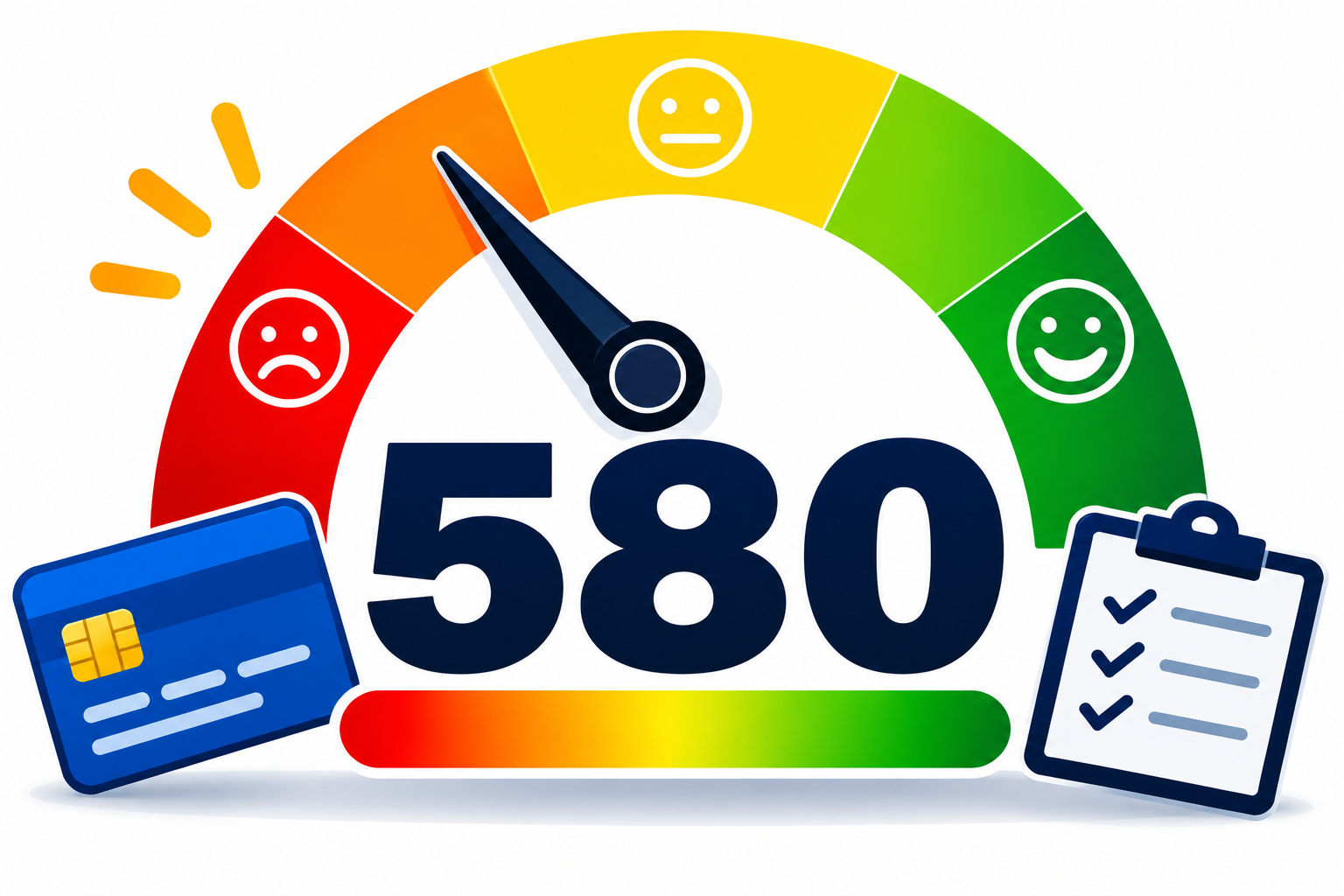
A 580 credit score is considered fair under the FICO scoring model. It is near the lower end of the credit score range and may make borrowing more challenging. Although some lenders approve applicants with a 580 score, they may offer higher interest rates, lower credit limits, or less favorable repayment terms than those available to borrowers with good or excellent credit.
Having a 580 credit score does not mean you cannot qualify for financial products. You may still have opportunities to apply for certain credit cards, auto loans, personal loans, and even mortgage programs. However, approval depends on more than your score. Lenders also consider your income, existing debt, payment history, employment, and overall financial situation.
If your score is currently 580, the most important step is understanding what is affecting it. Missed payments, high credit card balances, collection accounts, and limited credit history can all influence your credit profile. With consistent financial habits and a practical improvement strategy, you can work toward reaching 600, 620, 650, and eventually 700 or higher.
Is a 580 Credit Score Good or Bad?
A 580 credit score is generally considered fair under the FICO scoring model. It is not classified as good credit, but it is above the poor credit category, which ends at 579.
This means you may qualify for some financial products, but lenders may consider your application riskier than an application from someone with a higher score. Some lenders specialize in working with borrowers who have fair credit, while others may require a minimum score of 600, 620, or higher.
A 580 score can also affect the interest rate you receive. Even when a lender approves your application, the borrowing cost may be higher because the lender considers your credit profile less favorable.
What does 580 mean for your financial situation?
- You may qualify for certain credit cards and loans.
- Some lenders may require additional documentation.
- You may receive higher interest rates than borrowers with good credit.
- Your available credit limits may be lower.
- You may need a larger down payment for certain financing options.
- Improving your payment history and reducing debt can strengthen your credit profile.
A 580 score is not permanent. Your credit score can change as lenders report updated account information and your financial habits improve.
Understanding Credit Score Ranges
Credit scores in the United States generally range from 300 to 850. FICO and VantageScore are two major scoring systems, but their category labels and calculations are different.
Here is a general breakdown of FICO credit score ranges:
| FICO Score Range | Credit Category |
| 300–579 | Poor |
| 580–669 | Fair |
| 670–739 | Good |
| 740–799 | Very Good |
| 800–850 | Exceptional |
A 580 FICO score is at the beginning of the fair category. Even a small improvement can move your score farther into this range.
VantageScore uses different categories:
| VantageScore Range | Credit Category |
| 300–499 | Very Poor |
| 500–600 | Poor |
| 601–660 | Fair |
| 661–780 | Good |
| 781–850 | Excellent |
Under commonly used VantageScore models, 580 falls into the poor category rather than fair. This difference is important because the score category depends on the scoring model being used.
You may also have different scores across Equifax, Experian, and TransUnion because the information reported to each credit bureau can vary. A lender may use a different scoring model from the one displayed by your credit monitoring service.
Can You Get a Credit Card With a 580 Credit Score?
Yes, it is possible to get a credit card with a 580 credit score, but your options may be limited. Many traditional credit card issuers prefer applicants with higher scores, while some offer products designed for people who are building or rebuilding credit.
A 580 score may make it difficult to qualify for premium rewards cards, travel cards, or cards with large introductory bonuses. However, you may find other options that help you establish a stronger credit history.
Secured credit cards: A secured credit card generally requires a refundable security deposit. The deposit often determines your initial credit limit. If the card issuer reports your payment activity to the major credit bureaus, responsible use may help build your credit history.
Credit-building cards: Some financial institutions offer cards designed for applicants with limited or damaged credit histories. Review their annual fees, interest rates, deposit requirements, and reporting policies before applying.
Store credit cards: Certain retail cards have more flexible approval requirements, but they can carry high interest rates and limited usability. Do not apply simply because approval seems easier.
Credit union cards: Some credit unions offer products for members who want to establish or rebuild credit. Membership rules and approval requirements vary.
Before applying, check whether the issuer offers prequalification with a soft inquiry. A soft inquiry generally does not affect your credit score, while a full application may result in a hard inquiry.
Can You Buy a Car With a 580 Credit Score?
Buying a car with a 580 credit score is possible, but financing may be more expensive. Some auto lenders work with borrowers who have fair or lower credit scores. However, they may charge higher interest rates or require a larger down payment.
Your approval chances depend on your complete financial profile, including your income, employment history, current debts, loan amount, vehicle value, and down payment.
Auto loan interest rates: Borrowers with lower credit scores generally receive higher rates than borrowers with stronger credit. This can increase the total cost of the vehicle over the loan term.
Down payment: A larger down payment reduces the amount you need to finance. It may also make your application more attractive to a lender.
Loan term: A longer loan term can reduce the monthly payment, but it may increase the total interest paid. Compare the overall cost rather than choosing a loan based only on its monthly payment.
Dealership financing: Some dealerships work with multiple lenders, including lenders that serve applicants with lower scores. Compare their offers with banks and credit unions before accepting financing.
If possible, improve your credit before purchasing a vehicle. Even moving from 580 to 620 may expand your financing options, although no particular score guarantees approval or a specific interest rate.
Can You Buy a House With a 580 Credit Score?
Yes, a 580 credit score may be enough to qualify for certain mortgage programs in the United States. One important option is an FHA-insured mortgage.
According to FHA guidelines, borrowers with a qualifying credit score of 580 or higher may be eligible for maximum financing with a minimum down payment of 3.5%. Borrowers with scores between 500 and 579 generally need a down payment of at least 10%. Individual lenders can impose additional requirements.
FHA loans: An FHA loan may be an option for borrowers who do not have a strong conventional credit profile. However, you must still meet the program’s income, debt, property, and other eligibility requirements.
Conventional mortgages: Many conventional mortgage programs commonly require a minimum score around 620, although requirements can vary by lender and loan program. A 580 score may make conventional financing difficult.
Down payment and savings: Having money available for a down payment, closing costs, and emergency expenses can strengthen your overall application.
Debt-to-income ratio: Mortgage lenders review how much of your monthly income goes toward debt payments. A lower debt-to-income ratio can help demonstrate that you can manage a mortgage payment.
Mortgage interest rates: A lower credit score may result in less favorable mortgage pricing. Improving your score before applying may help reduce the long-term cost of borrowing.
If you are planning to purchase a home, speak with an FHA-approved lender and ask which credit score model and underwriting requirements apply to your situation.
Why Is Your Credit Score 580?
A 580 score can result from several factors. Understanding the reasons behind your score is essential because the right improvement strategy depends on what appears in your credit reports.
1. Late or missed payments
Payment history is one of the most important factors in a traditional FICO score. It accounts for approximately 35% of the calculation.
When you miss a payment on a credit card, personal loan, auto loan, or another reported credit account, the creditor may report the delinquency to the credit bureaus once it reaches the applicable reporting stage.
A payment that is 30 days late can negatively affect your credit history. More serious delinquencies, such as 60-day or 90-day late payments, can create additional problems.
2. High credit card utilization
Credit utilization measures the amount of revolving credit you are using compared with your available credit limits.
For example, if your credit card limit is $2,000 and your outstanding balance is $1,400, your utilization is 70%.
High utilization can negatively affect your score. Paying down balances and keeping utilization low may help improve your credit profile.
3. Collection accounts
If an unpaid debt is sent to a collection agency, it may appear on your credit report. Collection accounts can affect your ability to qualify for loans and credit cards.
Review the account carefully to confirm that the debt belongs to you and that the reported information is accurate. If anything is incorrect, you can dispute it.
4. Short credit history
A limited credit history can make it harder for scoring models to evaluate how you manage borrowed money. If you have only recently opened your first credit card or loan, your score may be affected by the limited information available.
5. Too many recent applications
Applying for several credit cards or loans within a short period can result in multiple hard inquiries. These inquiries may temporarily reduce your score and can make lenders more cautious.
6. Errors on your credit report
Incorrect account balances, duplicate collections, unfamiliar accounts, or inaccurate payment records can affect your credit score. Reviewing your reports regularly can help you identify and correct these problems.
How to Improve a 580 Credit Score
Improving a 580 credit score requires consistent effort. There is no guaranteed shortcut, but several practical steps can help you build a stronger credit profile.
Pay all bills on time: Make every payment by its due date. Set up automatic minimum payments or calendar reminders so you do not accidentally miss a payment. If you are already behind, contact the creditor to discuss available payment arrangements.
Reduce credit card balances: High credit utilization can be a major problem for someone with a 580 score. Focus on paying down outstanding balances and avoid adding unnecessary purchases to your cards.
Keep utilization low: There is no single utilization percentage that guarantees a particular score, but lower utilization is generally better. Many consumers aim to keep revolving balances below 30% of their total limits, and lower can be beneficial.
Review your credit reports: Obtain your reports from Equifax, Experian, and TransUnion through AnnualCreditReport.com. Check for inaccurate late payments, unfamiliar accounts, incorrect balances, and duplicate collection entries.
Dispute inaccurate information: If you find a genuine error, submit a dispute to the credit bureau reporting it and, when appropriate, the company that supplied the information. Disputing inaccurate information is free. Accurate negative information generally cannot be removed simply because you want a higher score.
Avoid unnecessary credit applications: Apply only when you need a new financial product. Before submitting an application, review the issuer’s eligibility requirements and consider whether prequalification is available.
Consider a secured credit card: If you cannot qualify for a traditional credit card, a secured card may help you establish positive payment history. Choose one with reasonable fees and confirm that the issuer reports to the major credit bureaus.
Manage debt responsibly: Create a monthly budget and prioritize paying down expensive debt. Avoid borrowing additional money simply to increase your credit score.
How Long Does It Take to Improve a 580 Credit Score?
The time required to improve a 580 score depends on the information in your credit reports. Some people may see progress within a few months, while others may need a year or longer.
If high credit card utilization is the main issue, reducing balances may help once the card issuer reports the updated information to the credit bureaus.
If your score is affected by missed payments, collections, or serious delinquencies, improvement may take longer. Consistently paying accounts on time can help establish a stronger recent payment pattern, but accurate negative information may remain on your report for several years.
You should avoid companies that promise to increase your score by a specific number of points overnight. Legitimate credit improvement usually comes from correcting errors, reducing debt, and demonstrating responsible account management over time.
580 Credit Score vs. 600, 620, and 650
Moving from 580 to a higher score can improve your financial position. Each increase may help expand your options, although lenders do not use one universal approval threshold.
| Credit Score | FICO Category | General Position |
| 580 | Fair | At the beginning of the fair range |
| 600 | Fair | Still within the fair range |
| 620 | Fair | May meet some conventional mortgage minimums |
| 650 | Fair | Closer to the good credit category |
| 670 | Good | Enters the good FICO range |
A score of 620 may help with certain conventional mortgage applications, depending on the lender and other eligibility requirements. A score of 670 enters the good FICO category.
Instead of focusing only on reaching a particular number, work on the financial habits that support a healthy credit profile. A stronger payment history and lower debt can benefit you beyond the score itself.
Common Mistakes to Avoid When Your Credit Score Is 580
When you are rebuilding credit, some decisions can slow your progress. Avoiding these common mistakes can help you protect your current score.
Closing old credit cards unnecessarily: Closing an account may reduce your available credit and increase your utilization. Consider the account’s fees and your spending habits before closing it.
Ignoring collection notices: Do not ignore collection accounts. Review the details, verify that the debt is accurate, and understand your options before making a payment arrangement.
Applying for multiple cards: Several applications can create multiple hard inquiries. Research products carefully and apply selectively.
Making only minimum payments indefinitely: Minimum payments help keep accounts current, but they can leave balances outstanding for a long time and increase interest costs. Pay more when your budget allows.
Believing every credit repair promise: Be cautious of companies that guarantee a particular score or claim they can erase accurate negative information. You can dispute errors yourself without paying a company.
Taking on unnecessary debt: You do not need to borrow money simply to build credit. Responsible use of existing accounts is usually a better approach.
Conclusion
A 580 credit score is considered fair under the FICO scoring model and may limit some borrowing opportunities. However, it does not mean you are unable to qualify for credit cards, auto loans, or certain mortgage programs. FHA financing may be an option for eligible borrowers with this score, although lender requirements and other financial conditions still apply.
The most effective way to improve your credit is to pay bills on time, reduce credit card balances, review your credit reports, and avoid unnecessary applications. Focus on correcting genuine errors and building consistent financial habits rather than searching for overnight solutions. With patience and responsible credit management, you can work toward 600, 620, 650, and eventually the good credit range.
Frequently Asked Questions
1. Is a 580 credit score good or bad?
A 580 credit score is considered fair under the FICO scoring model. It is above the poor category but below the good range. You may qualify for some loans and credit cards, but interest rates and terms may be less favorable.
2. Can I buy a house with a 580 credit score?
Yes, eligible borrowers with a 580 score may qualify for an FHA-insured mortgage with a minimum 3.5% down payment. Approval also depends on income, debt, property requirements, and lender-specific conditions.
3. Can I get a car loan with a 580 credit score?
Yes, some auto lenders work with borrowers who have a 580 score. However, you may face higher interest rates or a larger down payment requirement. Comparing offers from different lenders can help you find more suitable terms.
4. How can I raise my 580 credit score quickly?
Start by paying all bills on time, reducing credit card balances, checking your credit reports for errors, and avoiding unnecessary applications. If high utilization is the main issue, reducing balances may help once updated information reaches the credit bureaus.
5. How long does it take to go from a 580 to a 700 credit score?
There is no fixed timeline. Your progress depends on payment history, credit utilization, collections, and other information in your reports. Some people may improve within several months, while others may need a year or longer of consistent credit management.
One thought on “580 Credit Score: Is It Good or Bad, and How Can You Improve It?”